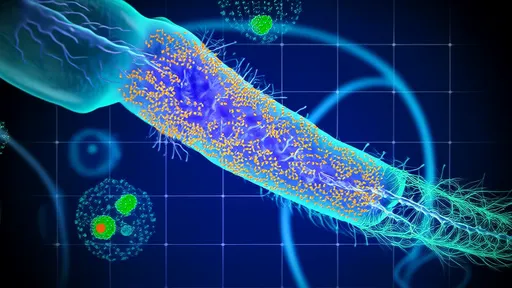
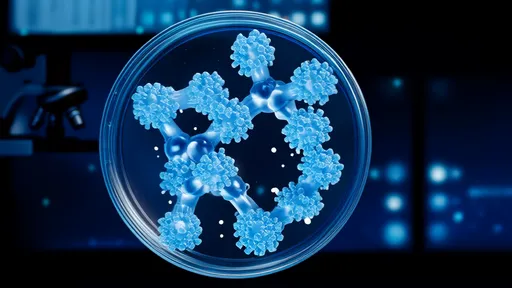
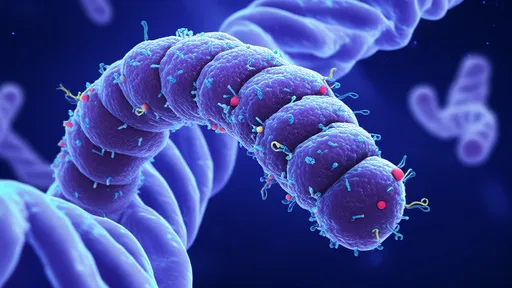
In the rapidly evolving landscape of precision medicine, a groundbreaking approach has emerged that leverages the unique properties of the M13 bacteriophage to deliver epigenetic editing tools with remarkable specificity. This innovative strategy represents a significant leap forward in targeted therapeutic interventions, merging virology, nanotechnology, and epigenetics to address complex diseases at their molecular roots. The M13 phage, a filamentous virus that naturally infects bacteria, has been ingeniously repurposed as a nanocarrier, offering a biocompatible and highly programmable platform for precise drug delivery.
The core of this technology lies in the phage's ability to be genetically and chemically modified to display targeting ligands on its surface, enabling it to recognize and bind to specific cell types with high affinity. By engineering the coat proteins of M13, researchers can conjugate antibodies, peptides, or other homing molecules that direct the phage to particular tissues or diseased cells, such as cancer cells, while sparing healthy ones. This targeted approach minimizes off-target effects and enhances the therapeutic efficacy of the cargo it carries—in this case, advanced epigenetic editors like CRISPR-based systems designed to modify gene expression without altering the DNA sequence itself.
Epigenetic editing tools, such as CRISPR-dCas9 fused to epigenetic modifiers (e.g., DNA methyltransferases or histone acetyltransferases), allow for precise manipulation of the epigenome to activate or silence genes implicated in various diseases. Unlike traditional gene editing, which permanently changes the DNA sequence, epigenetic editing offers a reversible and tunable means of regulating gene function, making it particularly attractive for treating conditions driven by epigenetic dysregulation, such as cancer, neurological disorders, and autoimmune diseases. However, the challenge has always been delivering these large and complex molecular tools safely and efficiently to the right cells in the body.
Enter the M13 bacteriophage. Its high aspect ratio and modular structure make it an ideal vector for packaging and protecting fragile epigenetic machinery. The phage capsid can encapsulate or display the editing components, shielding them from degradation in the bloodstream and immune detection. Moreover, the M13 phage is non-lytic and non-pathogenic to humans, reducing the risk of adverse immune responses compared to viral vectors like adenoviruses or lentiviruses commonly used in gene therapy. This biocompatibility, combined with its ease of production and scalability, positions M13 as a promising alternative for clinical translation.
Recent studies have demonstrated the efficacy of M13-mediated delivery in preclinical models. For instance, in a mouse model of hepatocellular carcinoma, researchers functionalized M13 phages with peptides targeting liver cancer cells and loaded them with a CRISPR-dCas9 system designed to demethylate and reactivate tumor suppressor genes. The treatment resulted in significant tumor regression and improved survival rates, with no detectable toxicity to normal liver tissue. Similarly, applications in neurological disorders have shown promise, where M13 phages engineered to cross the blood-brain barrier delivered epigenetic editors to modulate gene expression in neurons, offering potential avenues for treating Alzheimer's or Parkinson's disease.
The versatility of the M13 platform extends beyond its targeting capabilities. Its genome can be manipulated to incorporate reporter genes or regulatory elements that provide real-time feedback on delivery success and therapeutic outcome. Additionally, the phage can be loaded with multiple cargo types simultaneously, enabling combination therapies that address complex disease mechanisms—for example, delivering both epigenetic editors and chemotherapeutic agents for a synergistic effect in cancer treatment. This multifunctionality underscores the potential of M13 as a next-generation tool in the precision medicine arsenal.
Despite these advancements, challenges remain. Scaling up production to meet clinical demands, ensuring long-term stability of the phage formulations, and thoroughly assessing immunogenicity in humans are critical hurdles that need addressing. Regulatory pathways for phage-based therapeutics are also less defined compared to conventional drugs, requiring collaborative efforts between researchers, industry, and policymakers to establish standards and guidelines. However, the progress so far is encouraging, with several biotech companies investing in phage-based delivery systems and initiating early-stage clinical trials.
Looking ahead, the integration of M13 phage technology with epigenetic editing holds immense promise for personalized medicine. By tailoring the targeting ligands and epigenetic tools to individual patient profiles, therapies can be customized to achieve optimal outcomes with minimal side effects. This approach could revolutionize the treatment of genetic and epigenetic disorders, offering hope where traditional methods have fallen short. As research continues to unravel the full potential of this synergy, the future of precision medicine appears increasingly vibrant, driven by innovations that harness the power of nature's smallest entities to enact profound healing.
In conclusion, the fusion of M13 bacteriophage vectors with epigenetic editing tools exemplifies the cutting edge of biomedical innovation. It combines the precision of targeted delivery with the subtlety of epigenetic modulation, creating a powerful platform for tackling some of medicine's most persistent challenges. As scientists refine these techniques and navigate the path to clinical application, this technology may soon transition from laboratory curiosity to life-changing therapy, embodying the true spirit of precision medicine—right treatment, right target, right time.
By /Aug 27, 2025

By /Aug 27, 2025

By /Aug 27, 2025
By /Aug 27, 2025

By /Aug 27, 2025
By /Aug 27, 2025

By /Aug 27, 2025
By /Aug 27, 2025

By /Aug 27, 2025

By /Aug 27, 2025

By /Aug 27, 2025
By /Aug 27, 2025

By /Aug 27, 2025

By /Aug 27, 2025

By /Aug 27, 2025

By /Aug 27, 2025

By /Aug 27, 2025

By /Aug 27, 2025

By /Aug 27, 2025

By /Aug 27, 2025