In the intricate ballet of embryonic development, where clusters of cells migrate with astonishing precision to form complex structures, scientists are uncovering a fascinating dimension of cellular guidance. For decades, the prevailing models have focused on biochemical signaling—gradients of morphogens, adhesive cues, and chemotactic factors that direct cellular traffic. However, a growing body of research is pointing toward a more fundamental, physical force at play: endogenous electromagnetic fields. The concept of an embryonic morphogenetic field, long a theoretical construct in developmental biology, is being re-examined through the lens of bioelectromagnetics, suggesting that collective cell migration is not merely a chemical conversation but an orchestrated electromagnetic symphony.
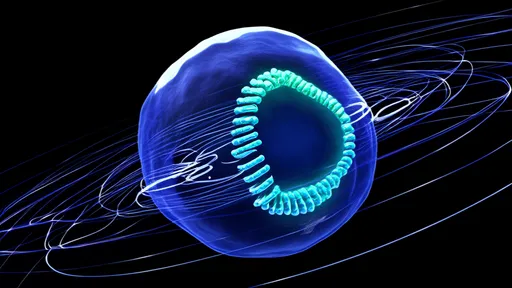
The journey begins with the establishment of bioelectric patterns across the early embryo. Long before the heart begins to beat and pump ions through the nascent circulatory system, cells themselves generate and maintain voltage gradients across their membranes. These transmembrane potentials, typically negative on the inside relative to the outside, are not uniform. Through the action of ion channels, pumps, and gap junctions, certain regions of the embryo can become electrically distinct, creating a landscape of varying electrical potential. This isn't a static map; it's a dynamic, living circuit. Researchers like Michael Levin at Tufts University have demonstrated that these pre-patterned bioelectric signals are not a passive byproduct of cellular activity but are, in fact, instructive. They serve as a kind of spatial coordinate system, providing cells with information about their position and their ultimate fate within the developing organism.
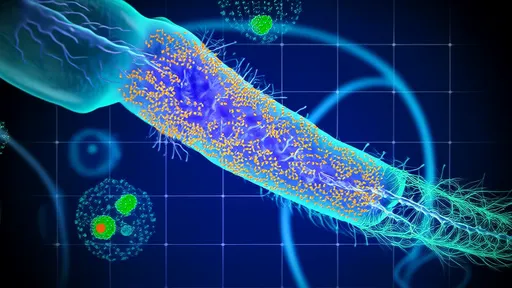
So how does an electrical field translate into directional movement for a collective of cells? The mechanism appears to be electrotaxis, or galvanotaxis—the ability of cells to sense and migrate along an electrical field vector. While observed in single cells like neutrophils and fibroblasts for over a century, its role in guiding large-scale, coordinated tissue movements in embryos is a revolutionary insight. Cells possess a toolkit of proteins that act as electromagnetic sensors. Voltage-gated ion channels on the cell surface can open or close in response to changes in the local field, altering ion flux and triggering intracellular signaling cascades. This can lead to a reorganization of the cytoskeleton, particularly the actin filaments that provide the motor for cell crawling. The cells essentially polarize, building their internal machinery to push in the direction dictated by the field.
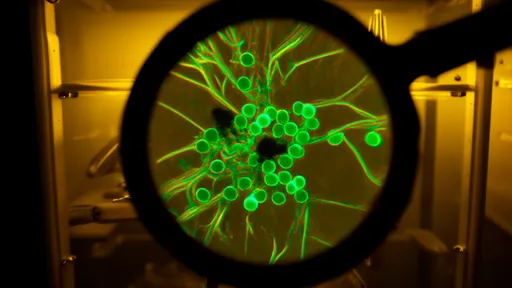
When this phenomenon is scaled up from a single cell to a collective, the implications for morphogenesis are profound. Consider the massive migrations that form the neural crest, often called the fourth germ layer. These pluripotent cells delaminate from the dorsal neural tube and embark on extensive journeys throughout the embryo to give rise to diverse structures including facial bones, peripheral nerves, and skin pigment cells. Following a pre-established electromagnetic guidance cue provides a elegant solution to the problem of how such a vast and dispersed population navigates with such high fidelity. The field acts as a universal conductor, ensuring thousands of individual cellular musicians play in unison, moving toward their correct developmental destinations without collision or error.
This electromagnetic guidance system offers several distinct advantages over purely chemical models. First is speed. An electrical field propagates almost instantaneously, allowing for real-time, organism-wide coordination. A chemical gradient, by contrast, must diffuse through tissue, a slower process susceptible to degradation and interference. Second is precision and stability. An electrical field can be maintained with high spatial definition, creating sharp boundaries that effectively corral migrating cells into specific pathways. Third is integration. Bioelectric signals are intimately linked with biochemical pathways; they can regulate gene expression and, in turn, be regulated by it. This creates a seamless feedback loop where genetic programming sets up the initial bioelectric pattern, which then guides the physical morphogenesis that realizes the genetic blueprint.
The evidence for this mechanism is mounting across model organisms. In zebrafish, manipulation of bioelectric patterns through pharmacological or genetic means can disrupt the normal migration of primordial germ cells, leading to misplacement and developmental defects. In frog embryos, artificially applied electric fields can override native chemical cues and redirect entire sheets of epithelial cells. Perhaps most compellingly, when endogenous electric fields are suppressed, even in the presence of correct chemical signals, key morphogenetic events like gastrulation and neural crest migration often fail or become highly disorganized. This indicates that the electromagnetic component is not merely supportive but is essential for successful development.
This paradigm shift forces us to reconsider the very fundamentals of cellular communication and organization. The embryo is not just a bag of chemicals; it is a dynamic electrochemical system. The concept of the morphogenetic field, once considered a vague and almost mystical idea, is now gaining a solid biophysical foundation. It is a field in the truest sense of the word—a non-material matrix of forces that shapes and guides material form. Understanding this electromagnetic dimension opens up revolutionary possibilities in regenerative medicine. If we can learn to read and write this bioelectric code, we could potentially guide stem cells to repair complex injuries, orchestrate the regeneration of entire limbs or organs, and correct developmental disorders at their physical root cause, moving beyond genetics to master the biophysics of form.
In conclusion, the silent, invisible dance of ions across cell membranes is emerging as a master regulator of one of life's most complex processes. The directed collective migration of cells, essential for building a body from a single cell, appears to be guided by an intricate electromagnetic map laid down in the earliest stages of life. This discovery bridges the gap between cell biology and physics, offering a more holistic and powerful understanding of how life constructs itself. The embryo, it seems, is not only reading a genetic script but is also listening to a deeply embedded electromagnetic rhythm, a fundamental force directing the beautiful and precise choreography of creation.
By /Aug 27, 2025

By /Aug 27, 2025

By /Aug 27, 2025

By /Aug 27, 2025
By /Aug 27, 2025

By /Aug 27, 2025

By /Aug 27, 2025
By /Aug 27, 2025
By /Aug 27, 2025

By /Aug 27, 2025

By /Aug 27, 2025

By /Aug 27, 2025
By /Aug 27, 2025

By /Aug 27, 2025

By /Aug 27, 2025

By /Aug 27, 2025

By /Aug 27, 2025
By /Aug 27, 2025

By /Aug 27, 2025

By /Aug 27, 2025