Polarization Vision in Insect Compound Eyes: Neural Mechanisms for Desert Ant Navigation Using Polarized Light

Aug 27, 2025 By

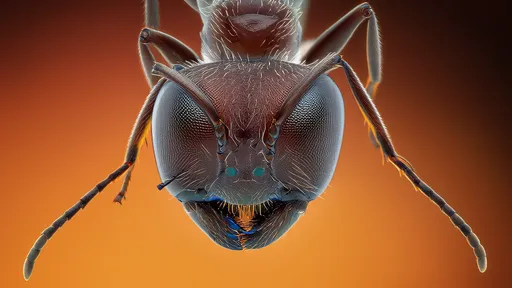
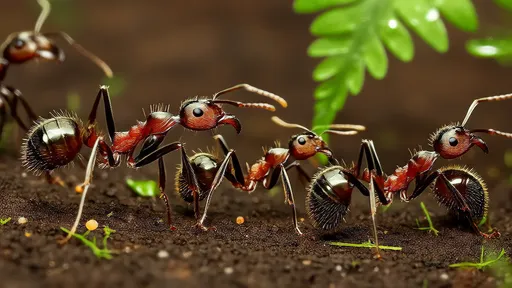
The desert ant Cataglyphis is a master navigator of barren landscapes, a tiny creature that forages under the blazing sun with a precision that belies its minuscule brain. It ventures hundreds of meters from its nest in search of food, a journey across a featureless terrain of sand and rock where landmarks are scarce and the heat is lethal. Yet, it consistently finds its way back along a near-straight line to its nest entrance, a hole barely visible in the vastness. This remarkable feat, known as path integration, relies on an internal pedometer to count steps and, most crucially, a celestial compass that reads the pattern of polarized light in the sky. The neural machinery behind this polarized light navigation is a breathtaking example of evolutionary miniaturization and efficiency, a biological marvel that has captivated scientists for decades.

Skylight polarization is a phenomenon caused by the scattering of sunlight in the atmosphere. This creates a pattern of polarized light—light waves oscillating in a specific plane—that forms a band across the sky, the exact pattern of which changes predictably with the sun's position. While invisible to humans without filters, many insects, including the desert ant, perceive this pattern through specialized structures in their compound eyes. For the ant, this pattern is not a vague glow but a dynamic compass dial painted across the dome of the sky, providing a constant directional reference as long as the sun, or even a small patch of blue sky, is visible.

The first stage of this sophisticated navigation system is the physical capture of this polarized light signal. This task falls to a specific region in the dorsal-most part of the ant's compound eye, an area named the dorsal rim area (DRA). The ommatidia, or individual eye units, in the DRA are uniquely adapted for this purpose. Their photoreceptor cells are highly sensitive to the angle of polarized light. Crucially, the microvilli—the light-sensitive structures within these cells—are aligned in two predominant, orthogonal directions. This arrangement allows the ant to perform a form of neural comparison, effectively measuring the e-vector (the direction of oscillation) of the incoming polarized light. This raw data is the fundamental input for the ant's celestial compass.

This raw visual information is then relayed from the retina to the first neuropil of the insect brain, the lamina, and then proceeds to the second neuropil, the medulla. It is here, within a small and specialized region of the medulla, that the initial processing of polarization data begins. Neurons in this region start the complex task of integrating signals from multiple DRA photoreceptors with differing microvillar alignments. This integration is essential for creating a more robust and noise-resistant signal, filtering out irrelevant visual clutter to isolate the crucial directional information encoded in the sky's polarization pattern.

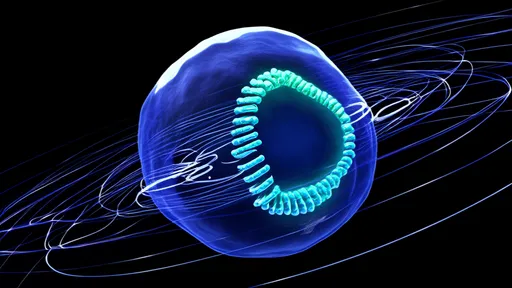
The processed information then makes a pivotal journey into the central complex, a intricate set of neuropils in the center of the insect brain that acts as the central processing unit for spatial orientation and navigation. Within the central complex, specifically in the ellipsoid body, lies the heart of the compass. Research has revealed a stunning neural architecture here: a ring of neurons whose activity forms a bump of neural excitation. As the ant rotates its body, this activity bump rotates around the ring of neurons, faithfully tracking the animal's heading in relation to the polarized light cue from the sky. This internal representation is a true neural compass, a continuous readout of the ant's current direction in its world.

The genius of this system lies in its translation of an abstract visual pattern into a concrete directional signal. The brain does not simply see "polarization"; it interprets it as a heading. The neural circuitry within the central complex is thought to compare the incoming, constantly updating polarization signal from the eyes against an internal template or model of the expected polarization pattern for a given solar position. Through this continuous comparison, the animal can determine its heading relative to a desired direction, such as the direction back to the nest. This allows it to make course corrections on the fly, maintaining a straight path home.

Path integration is the computational culmination of this process. The ant's brain is continuously performing a complex mathematical operation, integrating its heading (provided by the polarized light compass) with its velocity and distance traveled (likely provided by step-counting and optic flow) to constantly update its vector to the nest. This is a real-time, dead-reckoning system. The neural compass in the central complex provides the directional component of this vector, and it is believed that the adjacent protocerebral bridge structure may encode the distance component. Together, they form a unified neural representation of the homing vector, guiding the ant with astonishing accuracy.

The evolutionary pressures of the desert environment have sculpted this system to be exceptionally robust. The ant's compass can function with only a small patch of clear sky, an vital adaptation for an animal that may encounter obstacles or need to navigate under partially cloudy conditions. Furthermore, the system demonstrates a degree of plasticity and learning. While the basic template for decoding polarized light is innate, ants can recalibrate their compass systems based on new visual experiences, ensuring its accuracy throughout their lives. This combination of hardwired precision and adaptive learning makes the system both reliable and flexible.

Studying the desert ant's neural mechanisms offers far more than just a fascinating glimpse into the insect world. It provides a powerful model for understanding fundamental principles of sensory processing, neural computation, and navigation. Bioengineers and roboticists are deeply interested in reverse-engineering this compact and energy-efficient system. The creation of artificial polarized light sensors and algorithms inspired by the ant's brain could lead to major advancements in autonomous robot navigation, particularly for vehicles or drones that must operate in GPS-denied environments, such as on other planets, underwater, or in complex urban canyons. The humble desert ant, therefore, is guiding not only itself home but also pointing the way toward new frontiers in technology.

In conclusion, the journey of the desert ant from foraging site to nest is a silent epic written in neural impulses and interpreted through the lens of polarized light. From the specialized photoreceptors of the dorsal rim area to the sophisticated ring attractor network in the central complex, every stage of this process is a marvel of biological engineering. It is a powerful testament to the fact that profound computational complexity can be achieved within a tiny brain, offering elegant solutions to the universal challenge of navigation. The ant does not ponder the sky's mysteries, but its brain deciphers them with an efficiency that continues to inspire awe and scientific discovery.
Recommend Posts
Biology

Stem Cell Regeneration Blueprint: Discovery of Regeneration-Related Enhancers in the Mexican Axolotl"

By /Aug 27, 2025

In the dense rainforests of Mexico, an unassuming creature has long captivated the scientific community with its almost magical abilities. The axolotl, a permanently aquatic salamander, possesses the extraordinary capacity to regenerate entire limbs, spinal cords, and even parts of its heart and brain. For decades, researchers have peered into its biological toolbox, searching for the genetic blueprints that could one day inform human medicine. A groundbreaking study has now identified a crucial piece of this puzzle: a set of powerful enhancers that act as the master regulators of spinal cord regeneration.
Biology

Epigenetic Basis of Systemic Acquired Resistance in Arabidopsis thaliana: Plant Immune Priming

By /Aug 27, 2025

In the intricate world of plant biology, few phenomena are as fascinating as the concept of immune priming, particularly through systemic acquired resistance (SAR). At the forefront of this research stands Arabidopsis thaliana, the humble thale cress, which has served as an indispensable model organism for unraveling the molecular intricacies of how plants defend themselves against pathogens. While the biochemical pathways of SAR have been mapped with increasing precision over the past decades, a deeper, more enigmatic layer of regulation has emerged: the role of epigenetics. This heritable yet reversible control of gene expression, without alterations to the DNA sequence itself, is now recognized as a fundamental pillar of how plants "remember" past infections to mount a faster and more robust defense in the future.
Biology

Biological Hydrometallurgy: Recovery of Gold from E-Waste by Ferrous Sulfate-Reducing Bacteria

By /Aug 27, 2025

In the ever-evolving landscape of electronic waste management, a groundbreaking biological approach is capturing the attention of researchers and industry experts alike. The utilization of Acidithiobacillus ferrooxidans, a bacterium known for its role in bioleaching, is emerging as a sustainable method to recover gold from discarded electronics. This innovative technique not only addresses the growing environmental concerns associated with e-waste but also offers an economically viable alternative to traditional, often hazardous, extraction processes.
Biology

New Frontiers in Nanobodies: Mechanism of Shark Nanobodies Neutralizing SARS-CoV-2

By /Aug 27, 2025

In the relentless pursuit of effective countermeasures against SARS-CoV-2, the virus responsible for the COVID-19 pandemic, scientists have cast their nets into unexpected waters, uncovering a potent ally in the most ancient of vertebrates: sharks. The emerging frontier of nanobodies derived from these marine predators is rewriting the rules of viral neutralization, offering a glimpse into a future of robust and adaptable therapeutic interventions.
Biology

Protein Design Revolution: Breakthroughs in Predicting Membrane Protein Structures with RosettaFold2

By /Aug 27, 2025

The landscape of structural biology shifted seismically this summer when DeepMind's AlphaFold2 stunned the scientific community with its unprecedented accuracy in predicting protein structures from amino acid sequences. For decades, this problem—the protein folding problem—had been one of biology's grandest challenges. Yet, in the triumphant wake of this achievement, a significant frontier remained largely unconquered: the intricate and vital world of membrane proteins.
Biology

Polarization Vision in Insect Compound Eyes: Neural Mechanisms for Desert Ant Navigation Using Polarized Light

By /Aug 27, 2025

The desert ant Cataglyphis is a master navigator of barren landscapes, a tiny creature that forages under the blazing sun with a precision that belies its minuscule brain. It ventures hundreds of meters from its nest in search of food, a journey across a featureless terrain of sand and rock where landmarks are scarce and the heat is lethal. Yet, it consistently finds its way back along a near-straight line to its nest entrance, a hole barely visible in the vastness. This remarkable feat, known as path integration, relies on an internal pedometer to count steps and, most crucially, a celestial compass that reads the pattern of polarized light in the sky. The neural machinery behind this polarized light navigation is a breathtaking example of evolutionary miniaturization and efficiency, a biological marvel that has captivated scientists for decades.
Biology

Lichen Bioindicators: Sensitive Response of Fruticose Lichens to Atmospheric Heavy Metal Pollution

By /Aug 27, 2025

In the quiet corners of our cities, on ancient gravestones and weathered tree bark, an unassuming yet powerful sentinel of environmental health thrives. Lichens, those symbiotic marvels of fungi and algae or cyanobacteria, have long been recognized by scientists as nature's own pollution monitoring stations. Among these, the fruticose or shrubby lichens stand out for their extraordinary sensitivity to atmospheric heavy metal contamination, serving as early warning systems with a precision that often surpasses sophisticated mechanical devices.
Biology

Temperature Compensation of the Arabidopsis Circadian Clock in a Fluctuating Environment

By /Aug 27, 2025

In the intricate dance of life, organisms have evolved sophisticated internal timekeeping mechanisms known as circadian clocks to anticipate and adapt to the daily cycles of light and temperature. Among model organisms, Arabidopsis thaliana has emerged as a pivotal system for unraveling the mysteries of these biological rhythms. Recent research has deepened our understanding of a remarkable feature of the plant's circadian clock: its ability to maintain period stability despite fluctuations in ambient temperature—a phenomenon termed temperature compensation.
Biology

Embryonic Morphogenesis Field: Electromagnetic Field Guidance Mechanism for Collective Cell Migration

By /Aug 27, 2025

In the intricate ballet of embryonic development, where clusters of cells migrate with astonishing precision to form complex structures, scientists are uncovering a fascinating dimension of cellular guidance. For decades, the prevailing models have focused on biochemical signaling—gradients of morphogens, adhesive cues, and chemotactic factors that direct cellular traffic. However, a growing body of research is pointing toward a more fundamental, physical force at play: endogenous electromagnetic fields. The concept of an embryonic morphogenetic field, long a theoretical construct in developmental biology, is being re-examined through the lens of bioelectromagnetics, suggesting that collective cell migration is not merely a chemical conversation but an orchestrated electromagnetic symphony.
Biology

Revolutionary Applications of Dead Sea Halophilic Enzymes in Organic Synthesis

By /Aug 27, 2025

In the sun-scorched, mineral-rich waters of the Dead Sea, where life seems an impossibility, thrives a remarkable class of biological catalysts known as halophilic enzymes. For decades, the extreme conditions of hypersaline environments were viewed primarily through the lens of ecological curiosity. Today, however, the scientific and industrial communities are awakening to the immense potential locked within these resilient proteins. The study and application of extremophilic enzymes from the Dead Sea are spearheading a quiet revolution in organic synthesis, challenging conventional methodologies and opening doors to more sustainable, efficient, and previously unfeasible chemical processes.
Biology

Synaptic Markers: PKMζ Protein as a Molecular Switch for Long-Term Memory Maintenance

By /Aug 27, 2025

In the labyrinthine world of neuroscience, few discoveries have sparked as much intrigue and debate as the role of PKMζ in memory persistence. For over a decade, this atypical protein kinase was hailed as the master switch for long-term memory, a molecular guardian of our most cherished experiences. The story began with a series of elegant experiments that pointed to PKMζ as the essential molecule maintaining the strength of synaptic connections long after a memory was formed.
Biology

Precision Viral Therapy: M13 Phage-Mediated Delivery of Epigenetic Editing Tools

By /Aug 27, 2025

In the rapidly evolving landscape of precision medicine, a groundbreaking approach has emerged that leverages the unique properties of the M13 bacteriophage to deliver epigenetic editing tools with remarkable specificity. This innovative strategy represents a significant leap forward in targeted therapeutic interventions, merging virology, nanotechnology, and epigenetics to address complex diseases at their molecular roots. The M13 phage, a filamentous virus that naturally infects bacteria, has been ingeniously repurposed as a nanocarrier, offering a biocompatible and highly programmable platform for precise drug delivery.
Biology

Forest Wisdom Network: Trees Exchange Risk Alerts Through Mycorrhizal Networks

By /Aug 27, 2025

Deep within the forest floor, beneath the rustling leaves and the quiet hum of life, exists a sophisticated communication network that has silently shaped forest ecosystems for millions of years. This is not a network of wires and signals, but a biological internet, a complex web of fungal threads known as the mycorrhizal network. Often poetically dubbed the "Wood Wide Web," this subterranean system is now being understood by scientists as a fundamental medium through which trees share resources and, most intriguingly, exchange vital warnings about impending threats.
Biology

Deep Sea Gene Time Capsule: Ancient Microbial Genes from Mariana Trench Sediments

By /Aug 27, 2025

Deep beneath the crushing pressure and eternal darkness of the Mariana Trench, a scientific revelation is quietly unfolding. Researchers have uncovered what they term a "genetic time capsule" buried within the sediment layers of the ocean's deepest point. This treasure trove is not gold or jewels, but something far more precious: ancient microbial DNA, preserved for millennia in the unique, cold, and high-pressure environment of the hadal zone. The discovery opens a new window into Earth's distant past, offering clues about the evolution of life and the resilience of microorganisms under extreme conditions.
Biology

Ant Colony Optimization: A Swarm Intelligence Computational Model for Argentine Ant Foraging Paths

By /Aug 27, 2025

In the intricate world of computational intelligence, nature has long served as a profound source of inspiration. Among the most fascinating models derived from biological systems is the Ant Colony Optimization (ACO) algorithm, a metaheuristic that mimics the foraging behavior of real ant colonies. A particularly compelling case study within this domain focuses on the Argentine ant (Linepithema humile), a species known for its remarkable collective efficiency in locating and exploiting food sources. This article delves into the sophisticated computational model that translates the Argentine ant's path-finding prowess into a powerful tool for solving complex optimization problems.
Biology

Plant Acoustic Ecology: Directed Growth of Rice Roots in Response to Subterranean Sound Frequencies"

By /Aug 27, 2025

In the quiet world beneath our feet, a revolution in botanical understanding is taking root. For centuries, plants were considered passive organisms, simply responding to light, moisture, and nutrients in their immediate environment. But groundbreaking research in plant acoustics ecology is revealing an astonishing reality: plants not only perceive sound but actively use acoustic signals to guide their growth and survival strategies. Among the most compelling discoveries is how rice plants demonstrate sophisticated acoustic sensitivity, particularly through their root systems responding to specific underground frequency patterns.
Biology

Bioluminescent Marking: Gene Editing Tracing Technology for the Luminous Organs of Deep-Sea Lanternfish

By /Aug 27, 2025

In the perpetual darkness of the deep sea, nature has engineered one of its most mesmerizing adaptations: bioluminescence. Among the myriad of light-producing creatures, the lanternfish stands out not only for its abundance but for the sophisticated biological lanterns that dot its body. These intricate organs, capable of producing light through biochemical reactions, have long fascinated scientists seeking to understand their development, function, and evolution. Recent breakthroughs in genetic engineering have now made it possible to delve deeper into this luminous mystery than ever before.
Biology

Insect Wing Vein Fluid Dynamics: The Mystery of Dragonfly Wing Vein Structure Optimizing Aerodynamics

By /Aug 27, 2025

In the intricate dance of aerial mastery, few creatures command the skies with the precision and grace of the dragonfly. For centuries, observers have marveled at its acrobatic prowess—its ability to hover, dart, reverse, and accelerate with seemingly effortless control. While human aviation has relied on rigid, fixed-wing designs and powerful engines to achieve flight, the dragonfly operates on an entirely different principle, one honed by over 300 million years of evolutionary refinement. The secret to its unparalleled aerodynamic performance lies not in brute force, but in the elegant, complex architecture of its wings, specifically the intricate network of veins that form its structure. This is not merely a frame; it is a dynamic, fluid-responsive system that continues to baffle and inspire aerospace engineers seeking the next frontier in efficient flight.
Biology

Epigenetic Clock: A New Algorithm for Predicting Biological Age Based on DNA Methylation Patterns

By /Aug 27, 2025

In the ever-evolving landscape of biological research, the concept of aging has transcended mere chronological counting of years since birth. Scientists are now delving deeper into the molecular mechanisms that underpin the aging process, with a particular focus on epigenetic modifications. Among these, DNA methylation patterns have emerged as a powerful biomarker for estimating biological age—a measure that reflects the functional state of an organism rather than its calendar age. Recent advancements have led to the development of novel algorithms that predict biological age with unprecedented accuracy, opening new avenues for understanding aging and age-related diseases.
Biology

Coralization Sensing: Inhibition of Competitive Species Growth by Pocillopora Coral Sensing Substances

By /Aug 27, 2025

In the complex and often fiercely competitive world of coral reefs, a silent chemical war is constantly being waged. Beneath the sun-dappled, tranquil blue waters, corals are not merely passive inhabitants of their environment; they are active participants in a relentless struggle for space and light. Among the most fascinating and ecologically significant strategies employed is allelopathy, a form of interference competition where an organism produces biochemicals that influence the growth, survival, and reproduction of other organisms. The staghorn coral, Acropora cervicornis, a species renowned for its intricate, branching formations that provide critical habitat complexity, has emerged as a potent chemical warrior in this submerged battlefield.