The art and science of food preservation through freezing is far more nuanced than simply dropping temperatures below zero. At the heart of achieving optimal quality—texture, flavor, and nutritional integrity—lies a critical but often overlooked concept: the glass transition temperature (Tg). This isn't merely a number on a chart; it's a fundamental physical transition that dictates the very molecular behavior of water within our food. Understanding and respecting the unique Tg of different foodstuffs is what separates mediocre frozen products from exceptional ones. It is the key to unlocking freezing protocols that preserve food not just as a stable commodity, but as a culinary experience waiting to be thawed.
To grasp why Tg is so pivotal, we must first understand what happens during conventional freezing. When you place a strawberry or a piece of fish in a standard home freezer, the water inside it crystallizes. These ice crystals are jagged and destructive. They puncture cell walls, rupture muscle fibers, and cause the migration of water and solutes. Upon thawing, the damage is evident: a mushy berry that bleeds its juices, a piece of meat that exudes a large pool of watery loss, a sauce that has separated. This is the result of freezing too slowly, allowing large, damaging crystals ample time to form and grow.
This is where the concept of the glass transition temperature redefines the process. The Tg represents the temperature at which an amorphous solid, like the complex matrix of carbohydrates, proteins, and unfrozen water in food, transitions from a brittle, glassy state into a viscous, rubbery state upon heating (or vice versa upon cooling). Think of it not as a melting point, but as a hardening point. When a food product is cooled rapidly below its specific Tg, the unfrozen concentrated solution surrounding the ice crystals becomes so viscous that it solidifies into a glass. In this glassy state, molecular mobility is virtually halted. Diffusion stops, chemical reactions are drastically slowed, and—most importantly—the growth of existing ice crystals ceases. You effectively push the pause button on degradation.
The ultimate goal of advanced freezing, therefore, is to bypass this destructive crystalline phase as quickly as possible to achieve the stable glassy state. This requires cooling rates fast enough to outpace the natural tendency of water molecules to arrange themselves into orderly, damaging crystal lattices. The required rate is not universal; it is intimately tied to the food's composition, which directly determines its Tg. Foods high in simple sugars and salts have a lower Tg, meaning they require even faster cooling rates to achieve the glassy state before the concentrated solution becomes unstable. This is the cornerstone of designing a targeted freezing strategy.
Consider the delicate structure of fruits and vegetables. These are cellular structures with high water content held within rigid cell walls. Their Tg is influenced heavily by their natural sugar content. For instance, berries with high sugar content have a relatively lower Tg. A slow freeze causes massive cell rupture, leading to that all-too-familiar textural collapse. The optimal protocol involves an ultra-rapid freeze, often achieved using cryogenic fluids like liquid nitrogen or specialized air blast freezers at extremely high velocities and low temperatures (-30°C to -50°C or lower). This forms numerous, tiny ice crystals that do minimal structural damage, preserving the fruit's integrity, color, and taste perfectly.
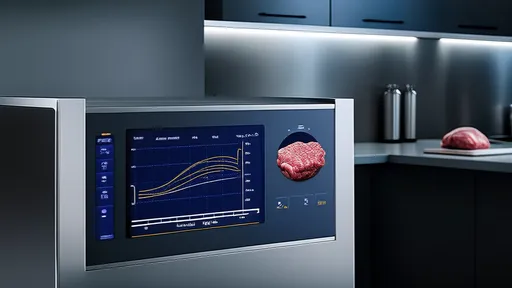
The world of animal proteins—meat, poultry, and fish—presents a different challenge. Here, the concern is less about cellular rigidity and more about muscle fiber and protein denaturation. The Tg for muscle tissue is affected by the concentration of salts and proteins in the sarcoplasmic fluid. Slow freezing leads to large extracellular ice crystals that dehydrate and compress muscle fibers, resulting in tough, dry texture and drip loss. The targeted approach involves a rapid, but not necessarily cryogenic, freeze. High-velocity air blast freezers set to temperatures between -25°C and -35°C are often ideal. This rate promotes smaller ice crystal formation both inside and outside the cells, minimizing drip loss and preserving the juicy, tender quality of the protein. For premium products like sushi-grade tuna, where crystal formation must be undetectable, cryogenic freezing is employed to lock in the pristine texture instantly.
Perhaps the most Tg-sensitive category is dairy and emulsified foods. Ice cream, for example, is a complex emulsion of fat, water, sugar, protein, and air. Its Tg is primarily dictated by its concentration of sugars and stabilizers. A slow freeze creates large ice crystals, yielding a coarse, icy, and sandy mouthfeel. The industrial freezing process is a masterpiece of thermal engineering. It employs a scraped-surface heat exchanger to freeze the mix extremely rapidly while simultaneously agitating it to keep ice crystals tiny and to incorporate air. The product is then hardened rapidly in a blast freezer to further solidify the structure without allowing crystal growth, ensuring that smooth, creamy texture we all love. Similarly, creams, custards, and sauces require rapid freezing to prevent phase separation, ice syneresis, and graininess.
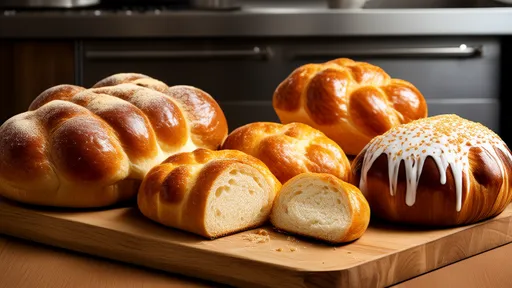
Then there are baked goods and prepared meals, which are complex composites of multiple ingredients, each with its own Tg. A ready-made lasagna contains pasta (starch), cheese (fat, protein), sauce (water, solutes), and meat. The overall stability of the product is governed by the component with the lowest Tg, which is often the sauce. A slow freeze causes water to migrate from the sauce into the pasta and meat, making the former icy and concentrated and the latter soggy. The optimal freezing strategy must be aggressive enough to vitrify the entire matrix. Spiral blast freezers and cryogenic tunnels are used to pull the core temperature through the critical zone as fast as possible, locking every component in place and preserving the intended texture and layered experience of the meal.
For the food industry, this is not merely academic; it has direct implications for equipment design and operational costs. Investing in a cryogenic freezer capable of -80°C is a significant capital expense, but for a producer of high-value soft fruits or gourmet ice cream, it is non-negotiable for quality. Conversely, a processor of frozen peas might find a high-efficiency air blast freezer at -35°C to be the perfect balance of cost and quality. The key is matching the technology's capability to the Tg-driven freezing rate requirement of the specific product. It’s a calculated decision where superior quality can command a premium price in the market.
In conclusion, moving beyond the one-size-fits-all approach to freezing is the future of food preservation. The glass transition temperature provides the essential scientific framework for this evolution. By recognizing that a strawberry, a salmon fillet, and a pint of ice cream each have a unique thermal personality, we can design freezing protocols that are as individual as the foods themselves. This targeted approach, which respects the profound implications of Tg, allows us to achieve the ultimate goal: delivering a frozen product that is virtually indistinguishable from its fresh counterpart, preserving not just calories and safety, but pleasure and delight.
By /Aug 29, 2025
By /Aug 29, 2025

By /Aug 29, 2025
By /Aug 29, 2025
By /Aug 29, 2025
By /Aug 29, 2025
By /Aug 29, 2025

By /Aug 29, 2025
By /Aug 29, 2025
By /Aug 29, 2025

By /Aug 29, 2025
By /Aug 29, 2025
By /Aug 29, 2025
By /Aug 29, 2025
By /Aug 29, 2025
By /Aug 29, 2025
By /Aug 29, 2025
By /Aug 29, 2025
By /Aug 29, 2025
By /Aug 29, 2025